
How Gear Pumps Handle High-Viscosity Fluids Efficiently
- Industry
Brenda A. Hayden
- 0
- 7 minutes read
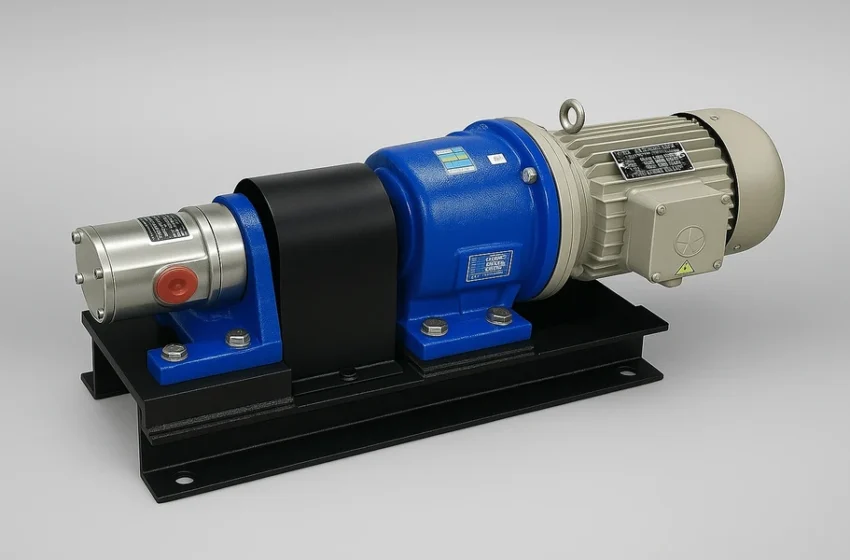
Industries that process thick liquids often rely on specialised pumping equipment to ensure smooth and uninterrupted operations. Fluids such as lubricating oils, syrups, resins, paints, adhesives, and certain chemicals can be difficult to move because of their high viscosity. Gear pumps are widely used in these situations because they provide consistent flow, reliable performance, and efficient fluid transfer. An external gear oil pump is particularly valued in applications where precise movement of heavy fluids is required without significant fluctuations in pressure or flow.
Understanding the Challenges of High-Viscosity Fluids
High-viscosity liquids resist movement more than low-viscosity fluids. This resistance creates several operational challenges:
- Increased energy requirements during pumping.
- Difficulty in maintaining a steady flow rate.
- Higher chances of pressure drops in pipelines.
- Greater wear on equipment if the pump is not designed for thick fluids.
Many conventional pumps struggle when handling dense liquids. Gear pumps, however, are specifically designed to overcome these issues through their positive displacement mechanism.
The Basic Working Mechanism of Gear Pumps
Gear pumps transfer fluid by trapping a fixed volume of liquid between rotating gears and the pump housing. As the gears rotate, fluid is carried from the inlet side to the outlet side, creating a continuous flow.
One reason industries prefer a gear pump external design is its simple construction and dependable performance. The meshing gears create sealed chambers that move liquid efficiently even when the fluid has a thick consistency.
Unlike centrifugal pumps, gear pumps do not depend heavily on fluid velocity. This allows them to maintain performance levels even when handling highly viscous materials.
Why Gear Pumps Perform Well with Thick Liquids
Several design features make gear pumps highly effective for high-viscosity applications.
Positive Displacement Operation
- Delivers a fixed amount of fluid with every rotation.
- Maintains consistent flow regardless of fluid thickness.
- Reduces variations in output during operation.
Strong Suction Capability
- Efficiently draws heavy fluids into the pump chamber.
- Minimises issues related to fluid movement at the inlet.
- Supports stable operation in demanding industrial environments.
Reduced Flow Pulsation
- Produces a smoother flow compared to some other pump types.
- Helps protect connected equipment from pressure fluctuations.
- Improves overall process stability.
These characteristics make gear pumps a preferred choice across manufacturing, chemical processing, and lubrication systems.
The Role of Internal Gear Pump Technology
Another popular option for handling viscous fluids is the internal gear pump. Understanding the internal gear pump working principle helps explain its effectiveness.
In an internal gear pump, a smaller gear rotates inside a larger gear. The spaces between the gears create chambers that trap and move fluid through the pump. This arrangement allows the pump to handle highly viscous liquids with minimal shear.
Key benefits include:
- Smooth and quiet operation.
- Ability to handle a wide viscosity range.
- Effective performance with sensitive products.
- Reliable transfer of heavy industrial fluids.
The internal gear pump working principle is particularly useful in industries where product integrity and controlled flow are important.
How External Gear Pumps Maintain Efficiency
Efficiency is critical when pumping thick liquids because energy consumption can increase significantly. The concept of the external gear pump working revolves around precise gear movement and tight internal clearances.
Several factors contribute to efficiency:
Accurate Gear Engagement
- Creates sealed chambers that prevent backflow.
- Supports steady pressure generation.
- Ensures continuous fluid transfer.
Minimal Internal Leakage
- Tight tolerances improve volumetric efficiency.
- Reduces energy loss during operation.
- Enhances overall pumping performance.
Durable Construction
- Designed to withstand demanding operating conditions.
- Suitable for prolonged use with heavy fluids.
- Reduces maintenance requirements over time.
Because of these advantages, understanding external gear pump working is essential for selecting the right pumping solution for industrial applications.
Industrial Applications of Gear Pumps
Gear pumps are used across numerous industries where thick fluids must be transferred efficiently.
Common applications include:
- Lubrication systems in manufacturing plants.
- Chemical processing operations.
- Paint and coating production facilities.
- Food processing units handling syrups and oils.
- Petroleum and fuel transfer systems.
An external gear oil pump is often chosen for lubrication and hydraulic systems because it can provide consistent flow under varying operating conditions. Similarly, many industries utilise a gear pump external configuration due to its reliability and straightforward maintenance requirements.
Driving Productivity Through Smart Fluid Handling
Efficient fluid transfer is essential for maintaining productivity, reducing downtime, and controlling operational costs. Gear pumps have become a trusted solution for handling high-viscosity liquids because of their positive displacement design, dependable flow characteristics, and ability to operate under demanding conditions. Whether based on the internal gear pump working principle or optimised through advanced external gear pump working mechanisms, these pumps continue to play a vital role in industrial fluid management. Their ability to handle thick liquids with precision makes them an indispensable asset for businesses seeking reliable and efficient pumping performance.
