
How Commercial Truck Crash Cases Are Built: What Happens After a Semi Hits You
- Law
Andrew P. Barstow
- 0
- 8 minutes read
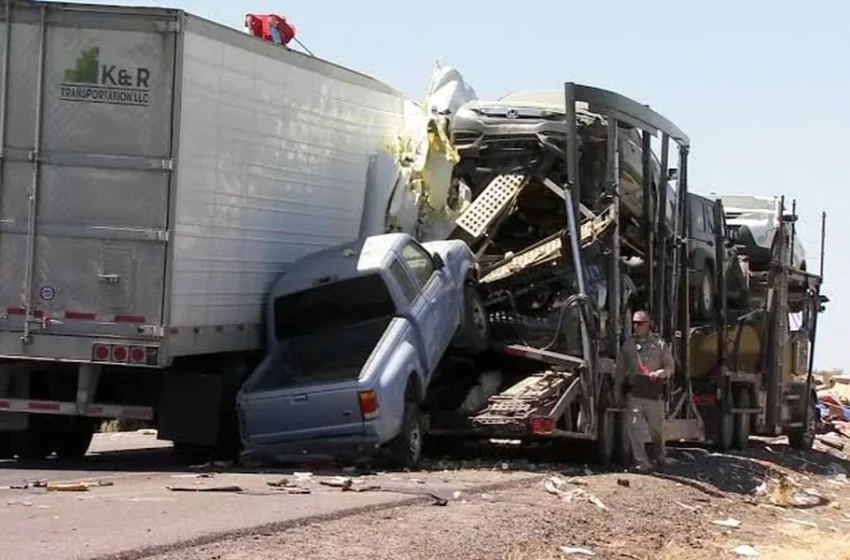
Within about ten minutes of a serious semi crash, three phone calls happen. The carrier’s risk manager calls its insurer. The insurer calls a defense firm. The defense firm calls an accident reconstruction crew. Your side hasn’t made a single call yet, and that gap is the entire ballgame.
I’ve spent years watching how these files get assembled from both directions, and the pattern never changes: the company that moves first controls what the record looks like later. So here’s the deal. By the end of this piece you’ll know which evidence disappears fast, who is legally allowed to collect it, and the exact order I’d work in if a tractor-trailer just totaled your car. No legal theory. Just the mechanics of how a case gets built or lost in the first week.
Why a truck crash is not a bigger car crash
A regular fender-bender usually comes down to two drivers, two insurers, and a police report. Add a commercial carrier and you’ve added a federal regulatory layer, a corporate defendant, and a maintenance paper trail that can stretch back years.
Motor carriers operating across state lines fall under rules set by the Federal Motor Carrier Safety Administration. That means hours-of-service limits, driver qualification files, drug testing records, vehicle inspection reports. None of that exists in a normal car case. It’s a second case hiding inside the first one, and it’s usually where liability actually lives.
Here’s my honest read: the biggest mistake people make is assuming fault is obvious because the truck rear-ended them. Fault isn’t the fight. The fight is what the carrier knew about that driver before the crash, and whether anyone can prove it.
Who shows up, and why it matters
You’ll get a call from a claims adjuster, sometimes before you’re out of the ER. That person is friendly, organized, and recording everything. Adjusters working commercial claims are trained specifically on catastrophic injury files, and their first offer is designed to close the file before a lawyer ever reads it.
What most people don’t realize is that the trucking company’s own safety director often arrives at the scene too, or sends someone. They photograph skid marks. They download the electronic control module. They talk to the driver before any statement gets taken. By the time a reconstruction expert shows up on your behalf, the physical scene may already be paved over.
I’d tell anyone in this situation to stop posting. Not one photo, not one “thank God I’m alive” caption. Defense firms screenshot social media within days, and a picture of you carrying groceries gets used to argue you’re not hurt. That’s not paranoia. That’s routine.
The evidence clock: what vanishes and when
This is where truck cases differ most from everything else. Commercial vehicles are rolling data centers, and most of that data has a shelf life measured in days.
Electronic logging device data shows speed, braking, engine RPM, and hours driven. Some
systems overwrite quickly. Dashcam footage may loop every few days depending on the setup. Driver logs, dispatch records, and text messages live on company servers that the carrier controls completely.
You can’t walk into a trucking terminal and ask for those files. Preservation generally requires a formal legal demand, and that demand has to land before the retention window closes. According to the National Highway Traffic Safety Administration, large trucks are involved in thousands of fatal crashes every year, which tells you carriers have built well-practiced systems for handling the aftermath. Their process is already running. Yours needs to start.
A quick preservation checklist
- Write down the truck’s DOT number and the carrier name from the door, and photograph both.
- Get names and phone numbers from every witness before they leave.
- Save your clothing, even torn. Don’t wash it.
- Keep a daily symptom and sleep log, one line per day.
- Do not sign anything from an insurer until someone who works for you reads it first.
The three-layer method I’d use on any tractor-trailer file
Most firms describe their approach as “aggressive representation,” which tells you nothing. So here’s a framework worth naming: the Three-Layer Method. Each layer answers a different question, and skipping one leaves a hole the defense will drive through.
Layer one, what happened. Accident reconstruction and biomechanics. Where were the vehicles, how fast, what forces hit your body. This is the visible layer, and it’s the one everybody focuses on.
Layer two, why it was allowed to happen. This is the compliance layer. Was the driver over hours? Was the brake system out of adjustment? Did the carrier hire someone with a disqualifying record? This layer wins more cases than the first one does.
Layer three, what it costs you going forward. Medical treatment, lost earning capacity, life care planning. A vocational expert can show what your work life looks like in five years, not just what you missed last quarter. Layer three is where the number actually gets built.
Around 3.5 million people drive trucks and other heavy vehicles in this country, per the Bureau of Labor Statistics. With that many drivers, dispatch pressure, and tight delivery windows, compliance failures aren’t rare events. They’re baked into the economics. That’s not cynicism. That’s just what the volume tells you.
Where an experienced truck accident lawyer changes the math
There’s a version of this where you handle it yourself and the first offer looks reasonable. A few people do fine with that. Most don’t, because they never see the maintenance file, never get the ECM download, and never learn the driver had two prior log violations.
An experienced truck accident lawyer does one thing a claimant can’t: file the preservation
letters, retain the experts, and put the carrier on notice that this file isn’t closing cheap. That’s the whole value. Everything else is follow-through.
I’d pick a firm that treats trial as the default plan, not the fallback. Carriers price cases based on how they expect them to resolve. If your representation looks like it will fold, the offer reflects that.
Timing, in plain terms
You have deadlines, and they vary by state. Evidence deadlines are much shorter and rarely published anywhere. That mismatch is the trap. The written filing deadline sits comfortably in the future while the dashcam footage from your crash is already gone.
What I’d do in week one: get a lawyer on the preservation demand, start a treatment record, stop talking to the adjuster, and write everything down while your memory is still sharp. Memory fades faster than people expect, especially after a head impact.
One more thing worth saying out loud. You don’t need to know whether you have a case before you call someone. You need to know whether evidence is still recoverable. That question has an expiration date, and it’s usually closer than you think.
So if the truck is still sitting in your driveway in your head, or you’re staring at a settlement letter that feels wrong, make the call this week. Not next month. The other side already made theirs.
